
Grip strength is usually the thing holding people back
Most people don’t set out to train grip. They notice it when something slips. A deadlift that should move easily starts sliding out of the hands. Pull-ups fail even though the back feels strong enough. Climbs end early because the fingers are cooked.
What makes it worse is that everything else feels fine. Legs are strong. Back is strong. Arms are strong. The hands just can’t keep up.
That’s frustrating, but it’s also fixable.
Grip strength responds fast when you stop ignoring it. Faster than most other strength adaptations, especially for beginners. That’s why it’s worth dealing with early instead of hoping it “catches up” on its own.
Before training, notice where things break down
You don’t need formal testing. You just need a rough idea of where your grip gives out.
Hanging from a pull-up bar is enough to tell you a lot. If you can’t hold on for 30 seconds, your support grip needs work. If a minute feels impossible, that’s normal for beginners.
Squeezing something simple like a tennis ball also helps. Most people feel one hand weaken faster. That imbalance shows up in training later if it’s ignored.
More useful than any test is paying attention during lifts. If deadlifts slip at the top, that’s grip. If rows torch your forearms early, that’s endurance. Those moments point directly at what needs attention.
Hanging sounds simple until you actually do it
Dead hangs work because they don’t allow shortcuts. Your hands either hold your bodyweight or they don’t.
Start wherever you are. Ten seconds is fine. Twenty seconds is progress. Over time, extending hang duration is enough challenge by itself.
Pay attention to how you hang. Keep the shoulders active and avoid swinging around. It’s easier on the joints and keeps the stress where it belongs.
Most people are surprised how quickly hang times improve once they’re consistent.
Carrying heavy things fixes more than grip
Farmer’s carries don’t look impressive, but they expose weak hands fast.
Pick up heavy dumbbells, kettlebells, or awkward objects and walk until your grip becomes the limiting factor. Start with loads you can manage for about half a minute.
As that gets easier, increase weight or distance. No rush.
Carries build grip endurance and stability in a way that shows up immediately in daily life. Bags feel lighter. Holds feel more secure. The improvement is obvious.
Towels make everything harder, fast
Wrapping a towel over a pull-up bar changes the grip completely. The thicker, unstable surface forces the fingers to work harder to stay closed.
Start with towel hangs. Pull-ups can wait.
This variation exposes weaknesses that smooth bars hide. Most people feel it right away, especially in the fingers.
How often to train without annoying your elbows
Grip doesn’t need daily work. In fact, daily grip training is one of the fastest ways to end up with sore elbows or irritated wrists.
Two to three sessions a week is plenty for beginners. Adding grip work at the end of normal workouts works well and doesn’t require extra gym time.
Ten to fifteen minutes per session is enough. Hands recover slower than people expect, and ignoring that usually slows progress instead of speeding it up.
Progress feels boring when it’s done right
Grip improves quickly at first, which makes people impatient.
The smartest progression is small and steady. Add a few seconds to your hang. Add a little weight to your carry. Track those changes instead of guessing.
Trying to rush because early gains feel exciting is how plateaus and injuries show up.
When basic tools stop pushing your grip
Eventually, hanging and carrying stop feeling challenging enough. That’s usually when people start looking for more specific grip tools.
Thicker handles, tougher grippers, and grip-focused equipment help once you’ve built a base. Sites like gripstrength.com exist for that phase, when you want controlled progression instead of improvising difficulty.
The timing matters. These tools work best after the basics are already solid.
Mistakes that slow everything down
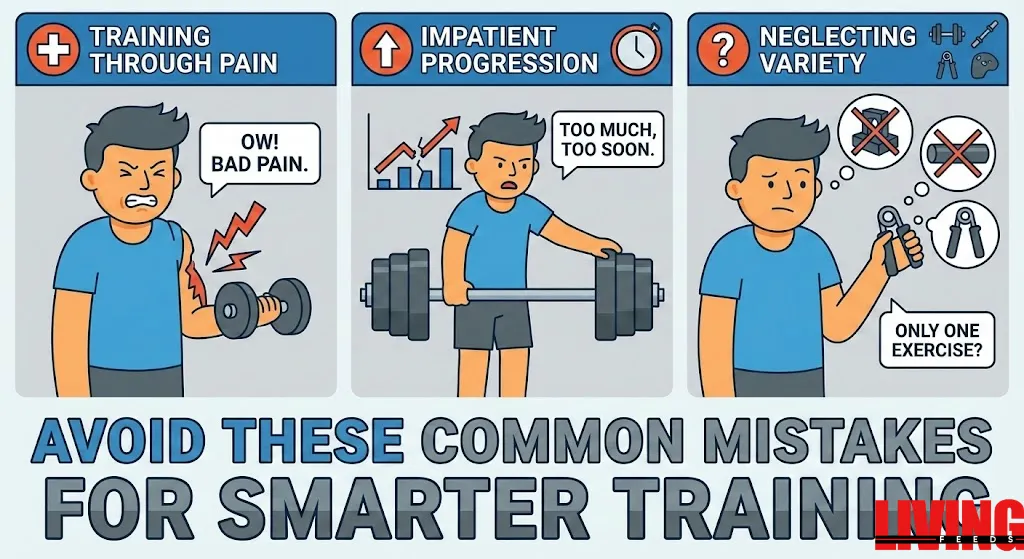
Training through sharp pain is the big one. Muscle fatigue is normal. Burning forearms are normal. Joint pain, numbness, or persistent soreness aren’t.
Another common mistake is doing only one type of grip work. Support grip, crushing strength, and endurance all matter. Rotating exercises keeps development balanced and prevents weak points from showing up later.
What progress usually looks like
Most beginners feel stronger within a month. Bars feel more secure. Hang times improve. The hands stop being the first thing to fail.
Bigger milestones take longer. Doubling hang time or closing significantly harder grippers usually takes a couple of months of consistent work.
Tracking simple numbers makes progress obvious even when it doesn’t feel dramatic day to day.
Why grip strength sneaks up on people
Grip strength doesn’t announce itself. It shows up quietly when lifts feel more controlled and carries stop being stressful.
That’s usually when people realize how much their hands were holding them back.
You don’t need complicated programming to fix it. Start simple, train consistently, progress slowly, and let the results stack up.
Resources like gripstrength.com provide equipment options designed specifically for systematic grip development. As you progress beyond beginner basics, these tools become valuable additions that take your hand strength to higher levels.
Common Beginner Mistakes to Avoid
Training Through Pain
Discomfort during training is normal, but sharp pain signals problems. Grip training shouldn’t cause joint pain, sharp tendon discomfort, or numbness. If you experience these symptoms, reduce intensity or volume immediately. Pushing through pain risks injuries that could sideline you for weeks.
Distinguish between the burn of muscular fatigue—acceptable and expected—and the sharp, specific pain of tissue damage. Learn this difference early to protect yourself from preventable setbacks.
Impatient Progression
Beginners often rush progression, adding weight or difficulty too quickly because initial gains come rapidly. This enthusiasm, while understandable, frequently leads to plateaus or injuries. Sustainable progress follows conservative programming that builds capacity systematically.
Resist comparing yourself to experienced trainers or online videos of people closing extremely heavy grippers. Their strength developed over years. Focus on your personal progression rather than external standards that may be far beyond your current capabilities.
Neglecting Variety
Some beginners find one exercise they enjoy—perhaps hand grippers—and do nothing else. Comprehensive grip strength requires training multiple grip types through varied exercises. Crushing, pinching, and support grip all deserve attention for balanced development.
Rotate exercises across training sessions to address all aspects of hand strength. This variety prevents boredom while ensuring no weaknesses remain unaddressed.
